3-axis vs 5-axis CNC machining: when do you need 5 axes?
Cutting on a flat table is one thing; machining a figure from every side is another. Here is the difference, explained with sculptures, furniture molds and foam parts from our own shop.
7 min readAnkara, Turkey5 Eksen CNC workshop
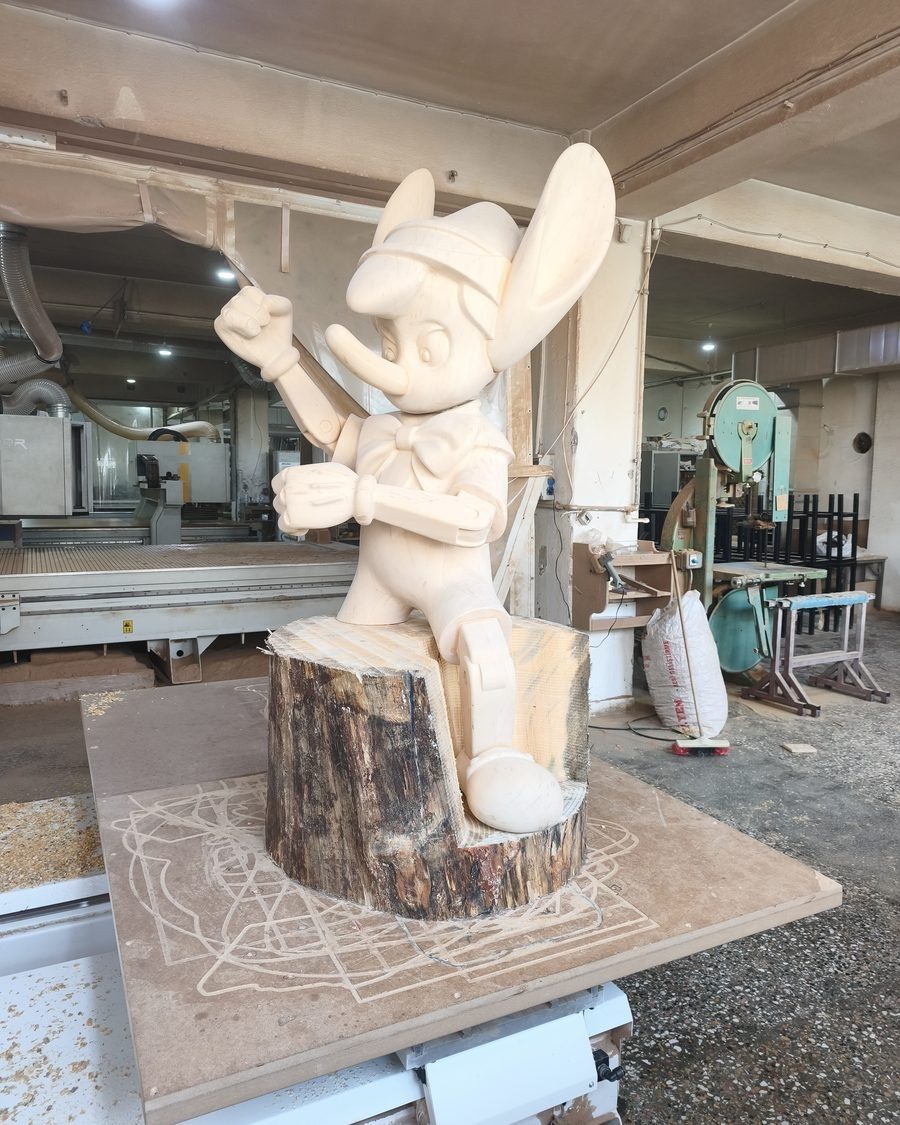
A figure straight off the 5-axis CNC
When people hear "CNC woodworking", most picture a router cutting shapes out of a flat sheet. That is 3-axis work, and it covers a lot. 5-axis machining is different: the tool can approach the part from almost any angle. In our workshop we machine wood, MDF, foam and XPS on a 5-axis CNC, and we use it for the parts a flat-bed router cannot make well.
The difference between 3-axis and 5-axis
A standard CNC moves in three directions: left and right (X), front and back (Y), up and down (Z). The tool always comes straight down. A 5-axis machine adds two rotary axes (A and B), so the tool can tilt and meet the surface at the right angle. Switch between the two below to see what changes.
On 5 axes
✓The tool tilts to meet the surface, so the hole is drilled at the right angle.
✓The part is clamped fewer times, so there are fewer setups.
✓Transitions on curved surfaces come out smoother.
When does 5-axis machining pay off?
If every face of the part is flat or faces up, 3 axes are usually enough, and cheaper. As the form gets more complex, in sculptures, molds and thick curved parts, 5 axes start to make the difference. Three examples from our shop:
Sculpture and figures
On a figure like this one, the nose, the arms and the face all point in different directions. Because the tool can approach each surface at an angle, we clamp the figure fewer times and get a cleaner surface off the machine.
After machining, the raw figure is sanded, detailed by hand and painted.
Furniture molds
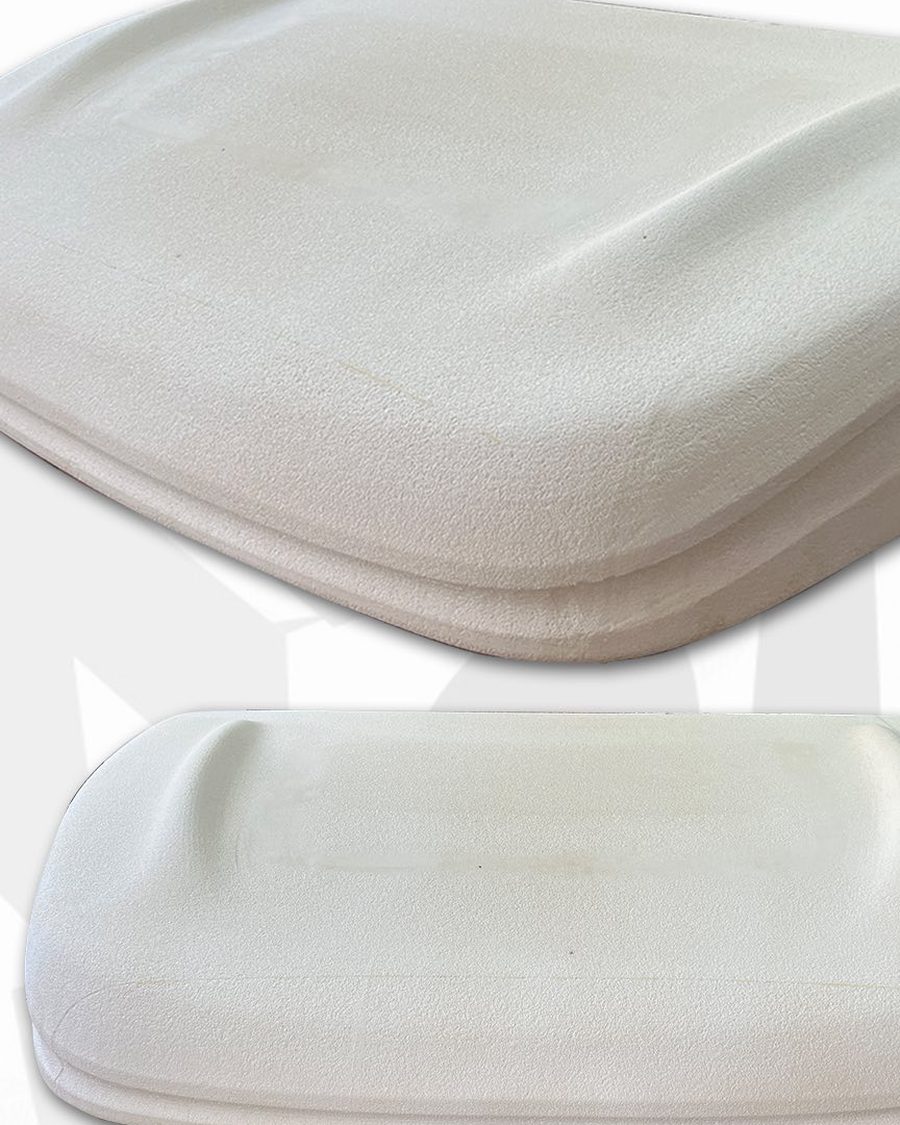
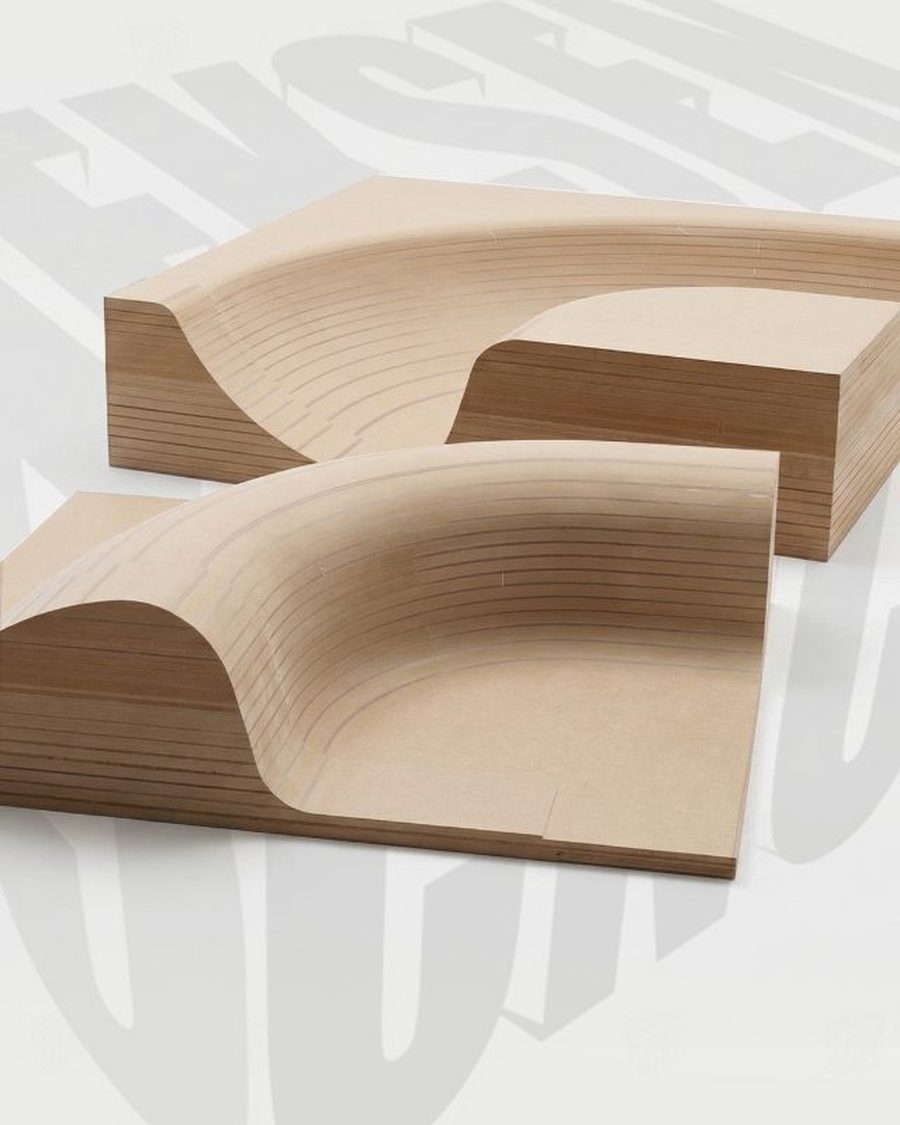
Molds for armchairs, chairs and curved panels have curved surfaces, and the two halves must fit each other exactly. Get the mold right, and every product that comes out of it is the same.
We make molds from MDF, solid wood or foam, depending on how the mold will be used.
Foam and XPS
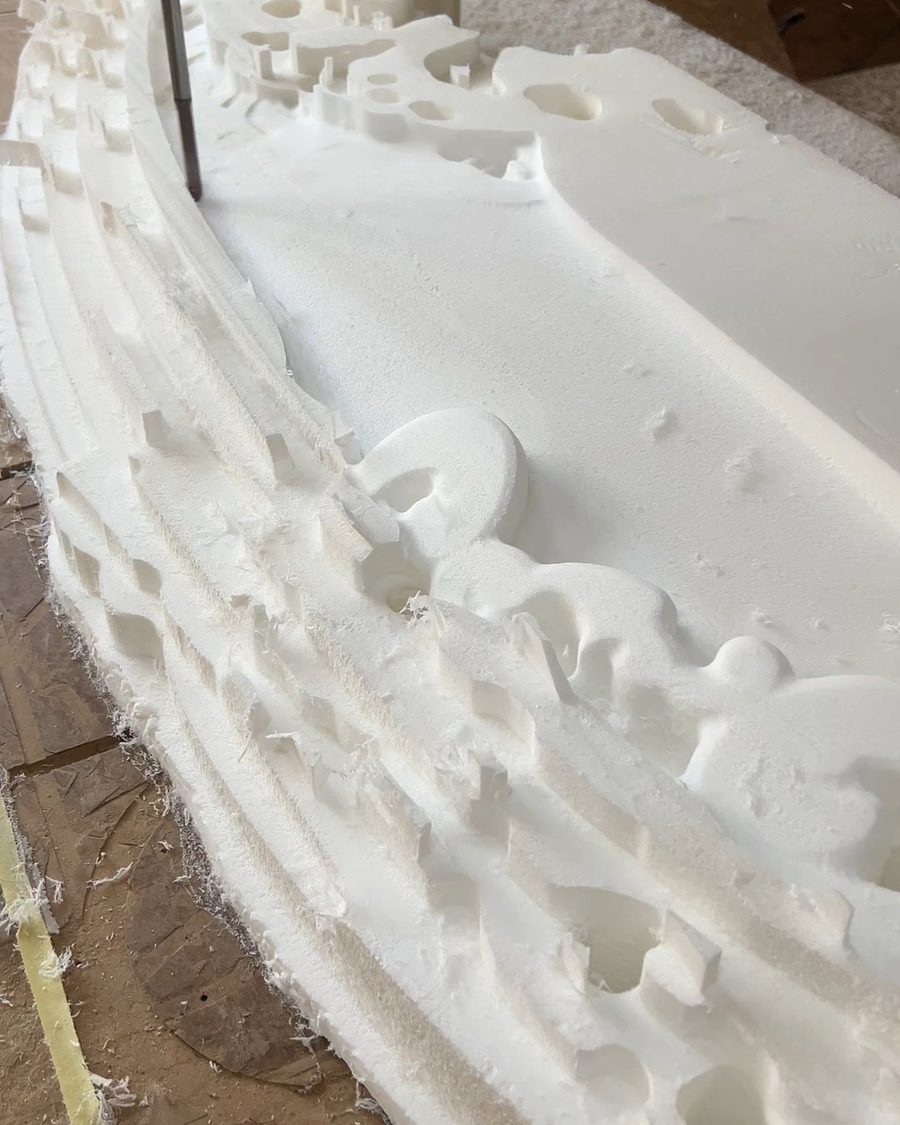
Foam and XPS are light and quick to machine. They work well for large curved parts, stage and trade show props, and master patterns for molds. The surface can be coated or painted afterwards.
Materials we machine
Solid wood
MDF
Foam
XPS
Aluminum
Brass
Carbon fiber
In our shop
Large parts in one piece
Our table is 98 × 79 in (250 × 200 cm), with 39 in (100 cm) of Z travel. That means a mold or a large sculpture can go on the machine whole, without being split into sections. The drawing shows the working area next to a 5 ft 9 in person, to scale.
98in long
79in wide
39in Z travel
Several moldsArmchair moldCurved press moldsMold machiningRelief in foam
How a 5-axis job runs
In 5-axis machining, most of the work is done before the machine starts. A part does not go on the table until we have planned which angles, which tools and which order it will be cut in. A typical job goes through five steps:
01
File or photo
We start from a 3D file, a drawing, or a photo with dimensions. If you have a sample, we can work from that too.
02
Model and size
No file? We build the model with you, and confirm size, material and how much surface detail you want.
03
Toolpaths
We plan on the computer which angles, tools and order the part will be machined in.
04
Roughing and finishing
Roughing passes remove the excess material, then finishing passes bring the surface to its final shape.
05
Finishing and shipping
Sanding, hand detailing, paint or coating if you want it. Then the part is packed and shipped to you.
What drives the price of 5-axis machining?
The price of a 5-axis part varies a lot from one job to the next, so we do not have a fixed price list. We build each quote from six things:
SizeA bigger part means more material to remove and more machine time.
MaterialSolid wood, MDF, foam and XPS machine at different speeds, and the materials themselves cost different amounts.
Surface detailFine detail and a smooth surface mean smaller tools and more finishing passes.
QuantityThe model and toolpaths are prepared once. The more parts you order, the more that setup is shared across them.
Ready fileWith a 3D file, no modeling is needed. With only a photo, modeling becomes part of the job.
FinishingSanding, paint or coating are quoted separately if you want them.
For customers in the USA, the quote also includes packing and shipping to your address, so you see the full cost up front. The most accurate price comes once we see your dimensions and a photo or file.
What should you send us?
You do not need a 3D file for every job. A drawing, or even a photo with dimensions, is enough to start. Pick your options below and your WhatsApp message will be written for you.
No. Most flat panels, cut-outs and surface carvings are done on 3 axes. 5 axes make the difference on sculptures, molds and thick curved parts whose surfaces face different directions. Send us your part and we will tell you which one fits.
I do not have a 3D file. Can I send a photo?
Yes. We can start from a photo and dimensions and build the model with you.
How is the price calculated?
By size, material, detail and quantity, plus shipping to your address. Send your dimensions and a photo and we will reply with a quote.
How large a part can you machine?
Our table is 98 × 79 in (250 × 200 cm) with 39 in (100 cm) of Z travel. Parts that fit are machined in one piece; for larger work, send your dimensions and we will look at it together.
Do you work with customers in the USA?
Yes. We quote in US dollars, pack every order for international shipping and ship it directly to your address.